What Reactivity Really Means and Why Dogs Overreact
Reactivity in dogs is an intense physiological response to an everyday trigger, such as a passing runner, a bicycle, or another dog walking across the street. While owners often confuse reactivity with outright malice or aggression, the underlying emotional driver is almost always fear, generalized anxiety, or intense barrier frustration. When a dog lunges, barks wildly, or spins on the end of a tether, their sympathetic nervous system has taken over, triggering a fight-or-flight cascade that shuts down higher cognitive processing in seconds.
Barrier frustration occurs most commonly when a leash or physical barrier prevents natural social communication. Dogs naturally greet each other using curved trajectories, relaxed body postures, and side-by-side sniffing rather than direct head-on approaches. When restricted by a tight tether, a dog cannot execute these normal evasive movements or de-escalation signals. The inability to escape or investigate creates acute stress, which quickly boils over into vocalizing, snapping, and erratic pulling that looks intensely aggressive to onlookers.
Recognizing early warning signs allows handlers to intervene before a full-blown meltdown occurs. Subtle indicators include a suddenly stiffened spine, mouth clamping firmly shut, hyper-fixated staring, dilated pupils, and ears pinned forward or flat against the skull. If you miss these subtle physical clues, the dog inevitably escalates to growling, barking, and lunging. Managing reactivity requires owners to spot these early behavioral shifts and create physical space before emotional arousal spikes beyond the threshold of learning.
Environmental context plays an enormous role in how comfortably a reactive dog moves through the world. A dog that struggles on narrow neighborhood sidewalks may thrive in wide, open fields where escape routes are readily apparent and sightlines are clear. Knowing your dog's specific threshold distance—the exact buffer they need between themselves and a potential trigger to remain calm and responsive—is the foundational baseline upon which every successful behavioral modification plan is built.
Recognizing Resource Guarding Between Dogs
Resource guarding is a deeply ingrained, natural survival instinct where an animal claims possession over items they perceive as valuable. In domestic settings, this behavior frequently emerges between dogs living under the same roof or interacting in public areas. Triggers can range from tangible objects like marrow bones, high-value chews, and tennis balls to intangible assets such as sleeping spots, doorway thresholds, or even the physical presence and affection of their human handler.

When guarding occurs between dogs, the tension builds along a predictable ladder of communication. Initial signs can be remarkably quiet, consisting of a dog freezing over the object, hovering their muzzle closely above it, or giving a hard side-eye glare, known commonly as whale eye. If the approaching dog ignores these quiet boundaries, the guardian will stiffen their shoulders, curl their lips to flash teeth, issue a low guttural growl, and eventually snap or lunge to drive the other dog away.
Social dynamics between familiar dogs can complicate this behavior significantly. A dog might willingly share water bowls and sleeping areas but become fiercely territorial over high-reward treats or a newly acquired squeaky toy. In unpredictable shared environments, resource guarding can trigger sudden brawls because strange dogs rarely read each other's subtle postural micro-cues accurately. Recognizing what your dog values most is the first step in preventing unnecessary skirmishes.
Preventing guarding between canines requires rigorous environmental management long before professional behavior modification begins. Removing high-value chew toys, feeding animals in separate physical rooms behind solid doors, and blocking access to narrow pinch points in the house prevents conflict before it starts. In public spaces like community dog runs, leaving toys, fetch balls, and food pouches at home prevents high-arousal disputes that endanger everyone involved.
Behavior Modification for Guarding and Tension
Resolving possession guarding between dogs requires systematic desensitization paired with positive counter-conditioning. The objective is never to bully, punish, or forcibly strip the item away from the guarding dog, as forceful intimidation only reinforces their fear that valuable items will be stolen. Instead, handlers must reshape the dog's emotional state so that another animal or person approaching an item predicts something even better arriving, shifting the emotional response from panic to anticipation.
The gold standard intervention for resource guarding is teaching a proactive trading protocol. When your dog has a mid-value item, you approach from a safe distance, show an exceptionally high-value treat like roasted chicken or hot dogs, and toss the treat several feet away from the guarded object. While the dog moves to consume the tossed treat, you allow them to keep their original item or return it immediately after inspecting it, proving that human proximity does not equal loss.
When rehabilitating guarding between two resident dogs, training must proceed with absolute safety and physical separation. Handlers typically work with two leashed dogs kept well outside their reactive zones. One dog holds a low-value chew while the second dog is walked into view at a calm, controlled distance. The moment the guardian notices the second dog, the handler delivers steady streams of premium treats to the guardian. Once the second dog walks away, the treats vanish immediately.
Over multiple sessions conducted across several weeks, the guarding dog begins associating the approach of another animal with positive outcomes rather than defensive scarcity. Progress must be measured carefully, advancing only when the dog exhibits loose body language, soft blinking eyes, and wagging tails upon spotting the other dog. If body tension, freezing, or hard stares reappear, the distance between the animals must be widened right away to keep arousal below threshold.
Training Foundations for Leash Reactivity
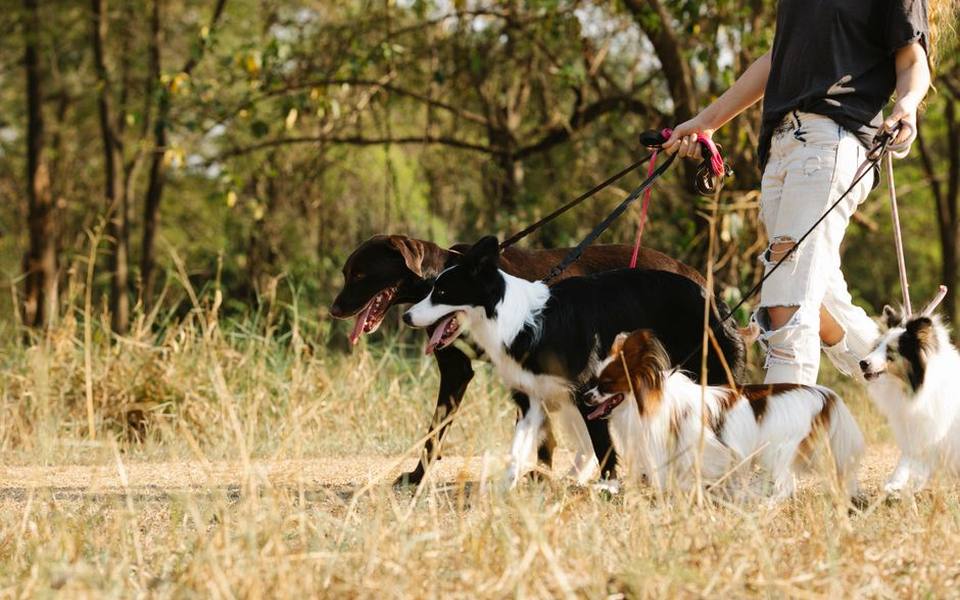
Countering reactive displays during daily walks begins by establishing clear, voluntary focus before opening the front door. Handlers frequently make the mistake of stepping directly into busy pedestrian environments while their dog is already keyed up, trembling with excitement, or pulling hard against the collar. Starting training indoors with basic eye-contact games, hand touches, and directional changes builds responsive muscle memory that holds up much better when outdoor distractions appear.
Structured leash reactivity training relies on maintaining a safe operating threshold where your dog can see a trigger without reacting defensively. Techniques like the Look at That game teach the dog that spotting another canine is a cue to glance back at their handler for a reward. Every time your dog notices a trigger and calmly turns back to make eye contact, mark the behavior verbally and deliver a reward, steadily rewiring their default reaction from defensive barking to voluntary disengagement.
Emergency handling maneuvers are equally essential tools when walking a reactive dog through tight neighborhood corridors. Handlers should master the emergency U-turn, which combines a cheerful verbal cue, a sweeping step in the opposite direction, and a rapid treat scatter on the sidewalk to pivot smoothly away from surprise triggers. Practicing these evasive turns in calm, empty settings ensures that both handler and dog can execute them instinctively when rounded blind corners reveal an approaching dog.
Selecting suitable walking spaces can dramatically reduce daily stress while foundational training takes hold. Many owners find initial success by visiting spacious, low-traffic areas before attempting crowded sidewalks. Exploring secure locations like Fenced Dog Parks during odd, quiet hours or utilizing open municipal greenbelts provides the spatial buffers reactive dogs require to decompress and practice their focus cues comfortably.
Selecting Heavy Duty Leashes and Hardware
Managing a powerful, reactive, or lunging dog requires dependable equipment that will not snap, fray, or fail under sudden kinetic shock. Standard fashion leashes made from thin nylon webbing or lightweight decorative stitching are completely inadequate for dogs prone to explosive lunges. When an eighty-pound dog hits the end of a tether at full sprint, the instantaneous force exerted on the stitching, swivel, and clasp can reach several hundred pounds of pressure.
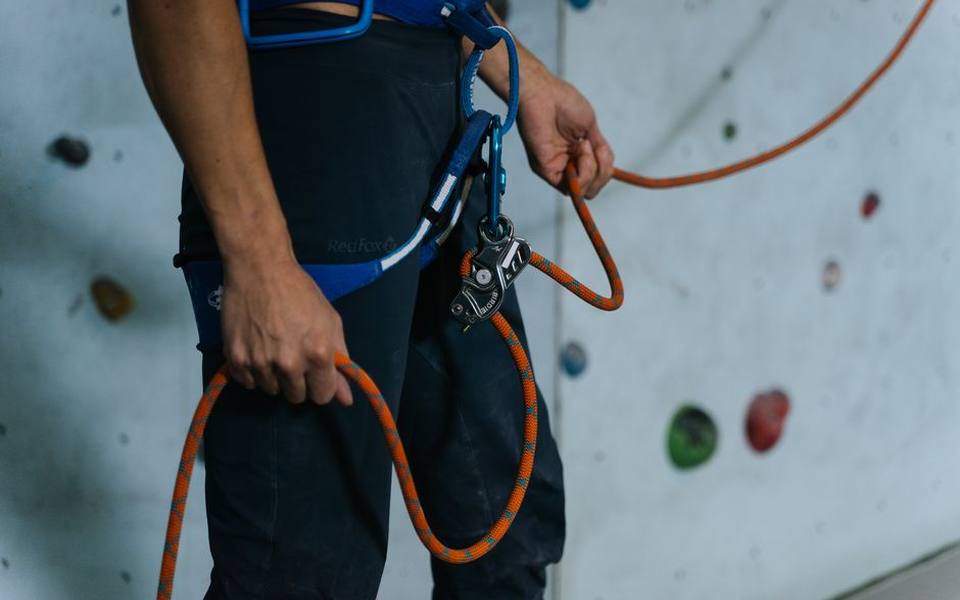
A reliable heavy duty dog leash should be constructed from dense mountain climbing rope or multi-layered, reinforced nylon webbing with heavy-gauge box stitching throughout. Climbing rope leashes offer slight natural elasticity, which helps absorb sudden shock and protects both the handler's shoulder joints and the dog's cervical spine from violent jolts. High-visibility reflective threading woven directly into the sheath is another indispensable safety feature for early morning and evening strolls.
The weakest mechanical link on any tether is almost always the metal clasp connecting the line to the harness. Standard swivel snap hooks made from cast zinc alloys can shatter cleanly in freezing weather or shear off under sharp angular torque. Look for an industrial heavy duty lead for dogs equipped with an aviation-grade aluminum carabiner or an auto-locking frog clip made from forged steel, both of which eliminate accidental spring-gate failures during unexpected lunges.
Dual-handle configurations offer exceptional utility for urban handlers navigating high-density footpaths. A secondary traffic handle sewn close to the clasp allows you to instantly reel in slack and keep your dog securely alongside your leg when passing tight bottlenecks, blind alleys, or crowded bus stops. Investing in high-grade equipment provides peace of mind, ensuring that a split-second behavioral burst does not turn into an accidental escape into traffic.
Running Leashes and Hands-Free Setups
Running alongside a dog requires specialized gear designed to preserve your natural gait while maintaining physical control. A standard handheld leash forces runners into an asymmetric arm carriage, which quickly leads to shoulder strain, hip imbalances, and reduced reaction speed if your dog pulls abruptly. Transitioning to an ergonomic dog running leash transfers the dog's pulling forces directly to the handler's core pelvic region, stabilizing balance across uneven running trails.
A proper runner's leash dog setup consists of a wide, padded waist belt connected to a heavy-duty tether featuring an integrated shock-absorbing bungee section. The elastic core expands smoothly when either runner or dog accelerates, buffering micro-tugs and eliminating the jarring impact of sudden pace changes. Most running belts also incorporate quick-release mechanisms that allow the runner to instantly detach the line using a single pull tab if an emergency unfolds.
Despite their convenience, hands-free running systems demand caution when paired with dogs that exhibit significant environmental reactivity. If an unexpected dog rounds a bend and triggers an explosive lunge toward the brush, having that force anchored directly to your waist can pull an off-balance runner completely off their feet. Handlers working with reactive runners must ensure the waist belt features manual grab handles along the tether to quickly seize manual control when triggers appear.
Before hitting technical trails or open fitness paths, practice using your running gear in low-distraction environments to establish consistent spatial boundaries. Handlers training in high-traffic regions like Dog Parks in California often utilize wide outer perimeter trails to build running endurance and proof verbal directional cues before navigating tighter recreational spaces where unpredictable interactions occur.
Using Long Training Lines Safely and Effectively
A long training leash dogs handlers rely on typically measures anywhere from fifteen to fifty feet in length, bridging the critical gap between close-heel leash work and full off-leash autonomy. Long lines allow dogs to explore natural scent trails, practice reliable recalls, and decompress in open fields while maintaining a physical safety tether. They provide an invaluable training mechanism for dogs undergoing reactivity rehab by allowing handlers to assess social distance without barrier tension.
Material selection makes a dramatic difference in how a long line handles across varied outdoor terrain. Traditional woven cotton or nylon lines readily soak up moisture, collect abrasive sand, and tangle relentlessly in tall grasses, burrs, and underbrush. Modern waterproof coated webbing, commonly referred to as Biothane, represents the premier choice because it slides effortlessly around tree trunks, resists knotting, wipes clean with a damp cloth, and never absorbs foul odors or pond mud.
Handling a long line demands deliberate technique to avoid painful rope burns or accidental tripping hazards. You should never coil a long line tightly around your fingers or wrist; if a dog takes off at full speed toward a distraction, a wrapped loop can sprain joints, tear ligaments, or break fingers instantly. Instead, gather and pay out the excess line in loose accordion folds across your palm, dropping folds smoothly as the dog ranges outward.
Long lines must always be paired with a well-fitted back-clip harness rather than a neck collar. If a dog reaches the end of a thirty-foot line at full sprint, the rotational force generated upon impact can cause devastating cervical trauma or trachea collapse if anchored around the throat. Securing the line to the center ring of an ergonomic chest harness distributes deceleration forces safely across the dog's ribcage, preventing catastrophic injuries during training sessions.
Navigating Group Play and Shared Environments
Introducing dogs into public group environments demands realistic assessments of temperament, arousal thresholds, and social tolerance. Not all canines enjoy chaotic multi-dog interactions, and forcing an introverted, nervous, or selective dog into packed off-leash environments often exacerbates reactivity rather than curing it. Mature dogs typically become dog-selective as they age, preferring structured, parallel walks with known companions over wrestling matches with unfamiliar peers.
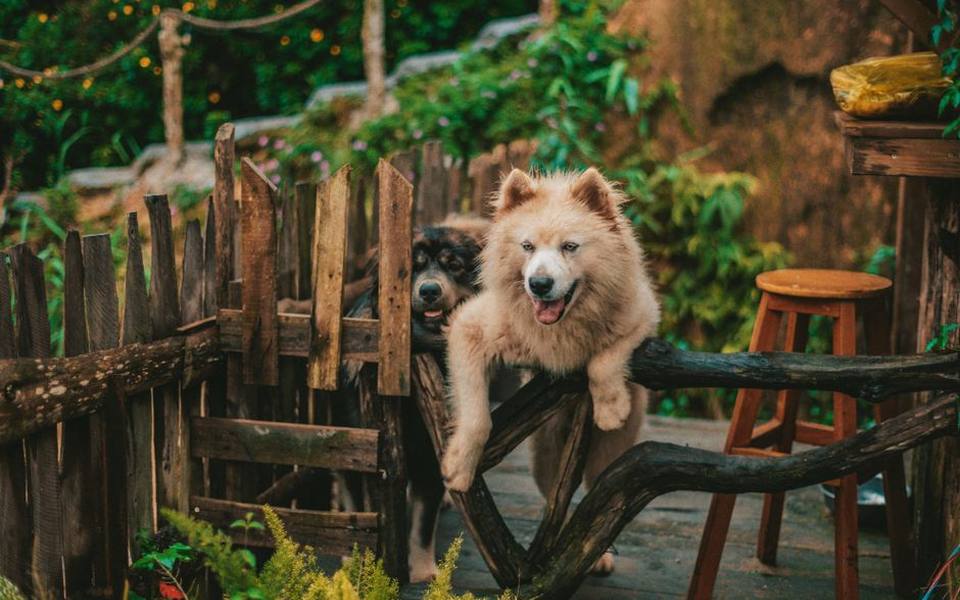
If you visit public off-leash zones, choose facilities designed to minimize territorial friction and spatial competition. Large municipal layouts such as Dog Parks in Texas often feature multi-acre fields where dogs can disperse naturally rather than clustering around high-tension entry gates. Narrow double-gate vestibules can become flashpoints for altercations when curious dogs crowd the threshold, trapping incoming animals in tight spaces where their flight options vanish.
Weather extremes also alter social dynamics by driving animals into confined spaces. During freezing winter stretches, handlers often explore climate-controlled facilities such as Indoor Dog Parks, which offer dry, padded exercise zones. However, indoor spaces can amplify noise, reverberating barks and echoey commotion that increase baseline arousal, making it critical to monitor your dog's tension levels closely in enclosed settings.
Environmental triggers like communal water troughs and discarded tennis balls can instantly ignite resource disputes among dogs that otherwise appear friendly. If you notice a dog hovering protectively near a public basin or standing stiffly over a ball, gently recall your dog and move to another quadrant of the park. Proactive observation prevents minor resource friction from escalating into an unmanageable group dispute.
How to Safely Intervene and Stop a Dog Fight
Witnessing a sudden, violent dog fight is terrifying, but reacting impulsively often leads to severe bite injuries for human handlers. In the chaos of an altercation, adrenaline surges instantly, and dogs enter an unthinking state of defensive combat. Reaching into the center of the fray to grab a collar, scruff, or harness almost guarantees a redirected bite, as fighting dogs snap blindly at anything touching their sensitive neck or flank areas.
The safest physical intervention is the wheelbarrow technique, which requires two adults working in unison to separate the animals without placing hands near teeth. Each handler approaches a dog from behind, firmly grasps the dog's hind legs just above the hocks, and lifts the rear end off the ground like a wheelbarrow. Walking backward in a steady, arcing circle forces the dog to step forward with their front paws to balance, preventing them from turning around to bite.
If you are alone when an altercation erupts, physical barriers and environmental deterrents should be deployed immediately before attempting hands-on separation. Pushing an agility plank, a large plastic trash can, or a heavy dog park bench between the fighting animals creates an instant visual break and physical barrier that disrupts their focus. Carrying bite-deterrent citronella spray or dumping a full five-gallon bucket of water over the dogs' faces can also cause a momentary gasping break.
Specialized safety gear is vital in recreational areas where dogs interact regularly, including expansive locations like Dog Parks in Florida where year-round park traffic remains high. Carrying a parting stick or break stick is advisable if you handle powerful bull-breed mixes or attend group play environments. A parting stick is inserted behind the back molars and gently rotated to safely pry open a locked jaw without breaking teeth or tearing tissue.
Setting Realistic Goals and Daily Routines
Rehabilitating reactivity and resource guarding is rarely a linear journey with an instantaneous finish line. Dogs are dynamic living creatures influenced by sleep quality, physical discomfort, hormonal fluctuations, and environmental stressors. Experiencing an occasional regression after weeks of peaceful neighborhood strolls does not mean your training protocol has failed; it simply signals that your dog reached their cumulative threshold of stress on that given day.
Trigger stacking is an essential concept every reactive dog guardian must understand to structure daily routines successfully. A dog that tolerates a thunderstorm in the morning, a postal delivery at noon, and a neighbor's lawnmower in the afternoon may have completely exhausted their nervous system's coping reserves by dinner. Taking that dog on a walk through a crowded urban district that same evening frequently results in explosive outbursts over minor triggers they normally ignore.
Incorporating decompression days into your weekly schedule accelerates long-term behavioral progress far better than relentless daily training exposure. Decompression days should consist of quiet rest at home, mental enrichment puzzles, scent-work games, or gentle exploration on a long line in deserted nature areas. Allowing the brain forty-eight hours to clear residual cortisol lowers baseline arousal, rendering future behavior modification sessions far more impactful.
Ultimately, living with a reactive or possessive dog requires shifting your perspective from finding a quick fix to embracing thoughtful daily management. By investing in heavy-duty gear, respecting your dog's emotional boundaries, and choosing thoughtful environments tailored to their needs, you build a foundation of mutual trust. With patience and consistent technique, walks become relaxed, safe, and genuinely enjoyable for both ends of the leash.
Published 2026-09-20 · reviewed with each rebuild, last September 2026.
Find dog parks near you
The directory lists 2,936 dog parks by state and city — pick your state or use the “Near me” button in the header.
More guides
-
 Owning
How to Find and Choose the Best Off-Leash Dog Parks
-
 Owning
What Is a Dog Run? Materials, Design, and Setup Guide
-
 Safety
Taking Your Dog Swimming: Safe Water Spots, Beach Rules, and Health Risks
-
 Service
How Much Does Dog Boarding Cost? A Clear Guide to Kennel Rates
-
 Owning
Dog Training Costs, Obedience Classes, and Essential Health Guidelines
-
 Owning
What Is a Reactive Dog? Signs, Triggers, and Management Guide
-
 Owning
A Practical Guide to Pet Adoption, Surrender Realities, and Essential Daily Care
-
 Safety
How to Safely Exercise and Run with Your Dog: Essential Gear and Conditioning Tips
-
 Safety
Comprehensive Guide to Dog Flea and Tick Treatments: Oral, Topical, and Natural Solutions
-
 Safety
Kennel Cough in Dogs: Symptoms, Home Remedies, and Prescription Treatments
-
 Owning
A Complete Practical Guide to Dog Beaches: Top Coastal Spots and Beach Safety
-
 Owning
Dog Car Seat Covers and Hammocks: Choosing the Best Vehicle Protection
-
 Owning
Understanding the Canine Heat Cycle: Phases, Physical Symptoms, and Female Care
-
 Owning
Essential Dog Hiking Gear: Backpacks, Hands-Free Leashes, and First Aid Kits
-
 Owning
Dog Agility Courses, Private Park Rentals, and Training Facilities: How to Choose the Right Space
-
 Service
Self-Service Dog Wash Stations: Equipment, Costs, and Practical Guide
-
 Buying
Automatic and Manual Dog Ball Launchers: How to Choose the Right Setup for Your Dog
-
 Safety
Complete Guide to Dog Flea and Tick Medications: Chews, Topicals, and Treatments
-
 Safety
Natural Flea and Tick Remedies for Dogs: Practical Home Solutions and Safe Use
-
 Safety
Safe Flea and Parasite Treatments for Puppies Under 12 Weeks
-
 Owning
Dog Poop Bags, Dispensers, and Leash Gear for Everyday Walks
-
 Owning
Ultimate Guide to Finding and Visiting Dog Parks and Dog-Friendly Beaches
-
 Safety
Dog Flea and Tick Guide: Comparing Chews, Topicals, Shampoos, and Injections
-
 Owning
A Homeowner's Guide to Backyard Dog Runs, Enclosures, and Exercise Treadmills
-
 Owning
A Complete Guide to Hiking, Camping, and Outdoor Adventures With Dogs
-
 Owning
Dog Health Guide: Giardia Symptoms, Canine Coughs, and Female Heat Cycles
-
 Buying
Dog Car Seat Covers, Hammocks, and Travel Gear: A Practical Buyer's Guide
-
 Buying
Choosing the Right Automatic Ball Launcher and Backyard Play Gear for Active Dogs
-
 Owning
Self-Serve Dog Wash Stations, Towels, and Waste Management
-
 Safety
Complete Dog Flea and Tick Prevention Guide: Chews, Topicals, and Treatments
-
 Owning
Dog Friendly Beaches, Parks, and Travel Destination Guide
-
 Safety
Essential Outdoor Dog Gear: Harnesses, Life Vests, Hot Pavement Boots, and Bags
-
 Safety
Dog Park Safety Guide: Rules, Aggression, First Aid, and Kennel Cough Symptoms
-
 Safety
Comprehensive Guide to Dog and Cat Flea, Tick, and Heartworm Medications
-
 Owning
Designing Home Dog Runs, Agility Courses, and Backyard Play Equipment
-
 Owning
Choosing the Best Car Seat Covers, Hammocks, and Backseat Protectors for Dogs
-
 Buying
Dog Ball Launchers and Automatic Throwers: Selection, Sizing, and Field Guide
-
 Safety
Dog-Safe Yard Care: Pet-Friendly Lawn Fertilizers and Pest Sprays
-
 Owning
Dog Heat Cycles: Symptoms, Duration, and Care During Estrus