Why vehicle upholstery needs dedicated canine protection
A reliable dog car seat cover does far more than keep loose fur off your upholstery. Without a barrier, sharp nails easily puncture perforated leather, ground-in trail grit grinds down woven fabrics, and damp coats leave lingering odors deep inside seat foam cushions. Investing in proper vehicle seat covers for dogs preserves both your cabin hygiene and the resale value of your automobile.
Active dogs routinely track outside grime into the vehicle after exploring outdoor spaces. Whether returning from local runs found in our guide to all states or taking daily neighborhood walks, dogs carry sand, sticks, and moisture directly onto your cushions. Standard consumer blankets slide around underfoot, bunching into useless piles the moment your pet adjusts weight during a turn.
A dedicated dog seat protector car owners install stays firmly anchored to the underlying bench. It creates a complete defensive shield against fluids, drool, and accidental leaks. Modern fabrics combine multiple laminated barriers that absorb surface grime on top while blocking liquid penetration from reaching factory carpeting or leather stitching underneath.
Beyond cosmetic wear, an unprotected cabin introduces unnecessary driving distractions. Dogs slipping on slick leather often scramble for balance, clawing armrests or attempting to climb into the front console. Equipping your vehicle with purpose-built canine car seat covers establishes a defined, predictable space where your pet feels balanced and confident on the road.
Comparing standard bench covers against back seat hammocks
When browsing vehicle seat covers for dogs, owners typically choose between flat bench covers and suspended hammock configurations. A standard bench-style dog seat cover for back seat installations drapes solely over the seat cushions, leaving the footwell completely open. This setup works nicely for passengers who share the row with a calm, belted dog, but it leaves floorboards exposed to falling debris.
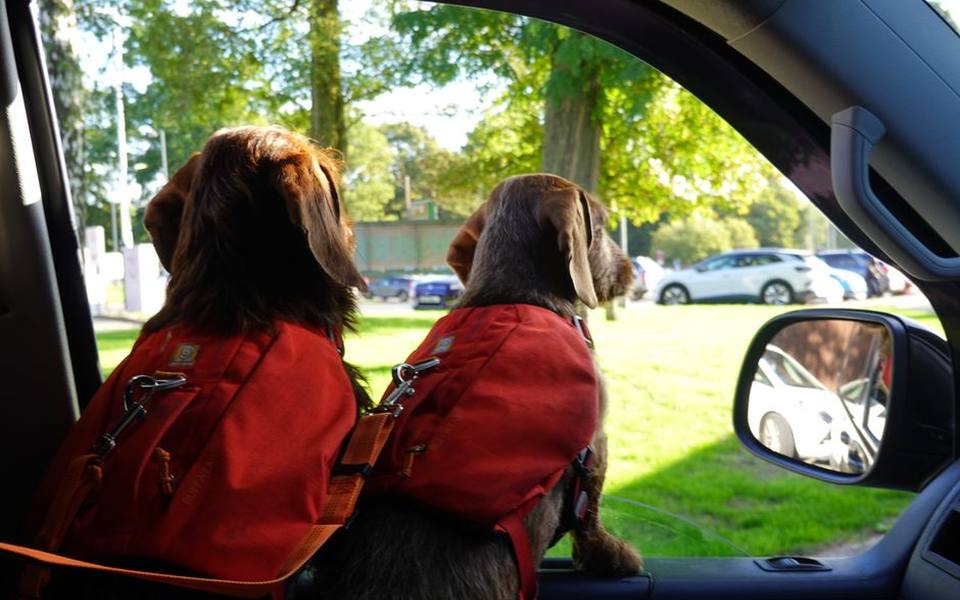
In contrast, a hammock-style carseat cover for dogs fastens to both the rear headrests and the back of the front seats. This cradle design bridges the drop into the rear footwell, creating an uninterrupted safety net. If you brake abruptly in traffic, a hammock prevents your dog from tumbling forward into the floor cavity, significantly reducing the risk of sudden sprains or joint impact.
Hammocks also discourage curious animals from stepping onto the center console to nudge the driver's elbow. By establishing a physical fabric wall between cabin rows, the hammock gently reminds dogs to stay settled in the rear. For larger breeds prone to pacing, this continuous basin eliminates the panic of misstepping into narrow leg gaps between seat rows.
However, bench designs remain practical if you frequently carry human passengers alongside your canine. Many modern modular hammocks feature heavy-duty split zippers down the middle, allowing one side to fold down flat for a human passenger while the other side maintains a protective sling for the dog.
Elevated booster baskets and dedicated doggie seats
Smaller companions often struggle with standard rear bench setups because low window sills prevent them from seeing out. A structured doggie seat for car use elevates toy and small breeds several inches above the seat bottom. This added height satisfies their curiosity, allowing them to look out the side windows and substantially decreasing motion-related nausea.
These elevated booster boxes generally loop around the vehicle headrest and secure against the seatback using the car's existing seatbelt framework. Built with rigid internal panels and padded fleece linings, a dedicated doggie seat for car travel keeps pint-sized pups contained in one secure zone rather than sliding across expansive leather benches during moderate cornering.
Safety remains critical when using raised baskets. Every booster box must feature an integrated safety tether that latches directly to a broad chest harness. You should never attach an interior booster tether to a dog's standard neck collar, as sudden deceleration could cause severe cervical strain or airway damage.
While booster seats provide exceptional comfort for dogs weighing under thirty pounds, larger breeds require full-sized bench shields. Placing a large dog in an undersized elevated carrier compromises balance and stresses vehicle seatbelt buckles, making full-coverage rear seat protector for dogs the safer alternative for medium and giant breeds.
Material compositions that endure water, grit, and claws
Durability depends entirely on the chemical coating and thread density of your canine car seat covers. The most resilient options utilize heavy-gauge 600D or 900D Oxford polyester, an exceptionally tightly woven synthetic fabric that repels sharp claws. Lesser fabrics, such as light nylon or thin cotton canvas, tear rapidly under the pressure of active paw nails.
Waterproofing technology varies significantly between budget models and heavy-duty designs. Top-tier covers feature a hot-pressed thermal lamination layer, usually thermoplastic polyurethane (TPU), sandwiched between the exterior fabric and the soft inner batting. This thermal bonding avoids needle stitching punctures, ensuring liquid cannot seep through stitch holes onto the seat below.
Dealing with water exposure is an everyday reality for owners who frequent muddy trails or destinations like Dog Parks with Water Features. A quality cover repels pond water and soggy muck long enough for you to drive home and wipe the surface clean, preventing mildew from colonizing deep inside your car cushions.
Underneath the fabric, look for a textured, heat-resistant silicone or rubberized backing mesh. Cheaper PVC vinyl backings can melt or adhere permanently to vehicle leather seats under intense summer dashboard heat. High-grade non-slip silicone grips stay pliable, anchoring the fabric across the leather without leaving chalky residue behind.
Anchor mechanisms and maintaining non-slip stability
The best fabrics provide little utility if your car dog covers for seats slide out of alignment whenever the vehicle takes a turn. Secure mounting relies on three interdependent anchor points: headrest collar loops, seat crease anchors, and lower corner straps. High-end designs incorporate robust nylon webbing with reinforced box-stitching at all high-stress seams.
Seat crease anchors play a crucial role in overall stability. These components consist of rigid rubber tubes or dense plastic handles attached to short webbing straps. By pushing these anchors deeply into the crevice where your seatback meets the bottom cushion, you lock the horizontal plane of the cover firmly against the seat frame.
Headrest straps should feature durable quick-release plastic buckles that adjust smoothly to accommodate varying post heights. In vehicles with fixed or molded headrests lacking accessible steel posts, look for covers that feature elasticized hood pockets or wrap-around rear extension straps that cinch firmly behind the entire seat contour.
Corner anchor straps wrap around the bottom bench edges, eliminating loose corners that curl upward when dogs hop in and out. When all three anchor mechanisms engage properly, your rear seat cover for dogs remains taut and flat, functioning almost like custom-tailored factory upholstery rather than an unstable loose tarp.
Hard-bottom platform bridges for extended support
For owners of giant breeds or multi-dog households, fabric hammocks suspended over open footwells can sag under substantial weight. A hard-bottom rear seat protector for dogs solves this challenge by integrating solid composite boards into the floor section. These high-density honeycombed panels span the entire gap between your front headrests and rear cushions.
By extending the flat surface area across the rear foot cavity, a platform bridge dramatically expands the usable lying space in compact cars and mid-sized sedans. Instead of curling tightly across a narrow cushion, your dog can sprawl out naturally without running the risk of stepping onto soft, unsupported fabric seams.
These structural platforms typically support weights exceeding one hundred pounds without bowing or flexing. Underneath the support boards, manufacturers often place thick, quilted foam that absorbs engine and road vibrations, resulting in a substantially smoother ride for older dogs suffering from canine arthritis or joint sensitivity.
Storage remains simple despite the interior rigid inserts. Most hard-bottom platform designs fold accordion-style into thirds or fourths, allowing you to collapse the unit into a neat bundle that slides easily into the trunk when carrying human colleagues or family passengers.
Side flaps, mesh windows, and door card protection
When excited dogs enter a vehicle, their paws frequently drag across painted door jambs and textured interior plastic trim. Upgraded auto seat covers for dogs feature zippered side flaps that fold upward to create a fully enclosed protective box. These vertical wings shield leather armrests and sensitive window switches from muddy splashes and scratch marks.
Many high-quality side flaps attach via auxiliary straps hooked to interior roof assist handles, creating a rigid barrier against interior door panels. When you arrive at your destination, you simply unzip the side flap, letting it drape downward over the car's metal door sill to protect vehicle paint while your dog jumps out.
Another essential refinement is the center mesh visual window. Solid fabric barriers completely block airflow from dash air conditioning vents, leaving the rear cabin warm and stagnant on humid days. A center rubberized mesh panel allows cool, conditioned air to circulate freely into the rear seat area while your dog reclines comfortably.
Visual transparency also calms anxious travelers. Dogs that panic when separated from their owners can glance through the mesh divider to see the driver and front passenger clearly. This unobstructed line of sight reduces pacing and whines on longer highway journeys or when traveling back from local Indoor Dog Parks.
Washing protocols and preserving waterproof membranes
Regular care keeps your carseat cover dog setup smelling fresh while safeguarding its protective barriers. For routine weekly dust and fur, vacuuming with a rubberized pet hair nozzle or wiping down the surface with a damp microfiber cloth is usually sufficient. Avoid unbuckling the entire unit after every minor drive if a quick sweep removes dried debris.
When severe mud or digestive accidents require deep cleaning, review the manufacturer laundering guidelines carefully. While some heavy-duty covers allow gentle cycle machine washing in cold water, machine drying must be avoided entirely. High dryer temperatures melt the waterproof TPU lamination and cause rubberized silicone backing dots to degrade and stick together.
The ideal cleaning method involves spreading the cover flat on a driveway or patio deck, scrubbing soiled sections with mild dish detergent and a soft-bristled brush, and rinsing with a garden hose. Allow the unit to air dry completely in the shade before reinstalling it in your vehicle interior.
Never use harsh chemical bleaches, citrus-based solvents, or industrial degreasers on waterproof vehicle seat covers for dogs. Aggressive detergents dissolve the water-repellent finish applied to the top polyester layer, leaving the fabric vulnerable to rapid liquid saturation on subsequent outings.
Seatbelt pass-through slots and passenger harness security
Vehicle seat protection must always integrate seamlessly with safety restraint systems. Reputable manufacturers design every car dog covers for seats configuration with hook-and-loop velcro openings built directly into the seat crease seam. These reinforced slits allow vehicle seatbelt buckles and metal latch anchors to pass through without letting dirt fall onto the cushion beneath.

A seatbelt pass-through permits the installation of crash-tested tethers that click into standard automotive buckles. Securing your dog to a certified vehicle harness limits dangerous cabin displacement during high-speed braking. Allowing a dog to roam unrestrained across the rear seat exposes both the animal and human passengers to severe physical danger in sudden maneuvers.
Check that the velcro seams around seatbelt pass-throughs overlap tightly. Low-quality covers leave wide, loose gaps where crumbs, dried mud, and sand slip straight through to settle invisibly beneath the cover, grinding into leather grain or upholstery weaving over months of road travel.
If you regularly transport young children in child car seats alongside your pet, verify that the cover provides access to dedicated steel child seat anchors. Universal bench covers with full-length zipper access accommodate split seats, enabling human safety seats and canine protection to coexist harmoniously across the same row.
Matching cover configurations to specific vehicle body styles
Vehicle dimensions vary widely across sedans, full-sized pickup trucks, and large three-row sport utility vehicles. Before purchasing auto seat covers for dogs, measure your rear bench width from the outermost edge of the driver-side door armrest across to the passenger-side door. Standard covers span roughly fifty-four inches, which matches most compact and midsize sedans.
Truck and large SUV owners typically require extra-wide sizes measuring sixty inches or more. Installing a compact cover in a full-sized truck leaves several inches of exposed upholstery on either flank, allowing dirt to bypass the protective layer entirely. Conversely, cramming an oversized truck cover into a compact sedan leads to excessive bunched fabric that slides underfoot.
Take into consideration split-folding rear benches as well. If your crossover features a 60/40 or 40/20/40 split bench, select a cover that features modular vertical zippers aligned with those splits. This allows you to fold down one section of seating for long cargo like sports gear while keeping canine protection fully operational on the remaining seat.
Owners planning weekend adventures across sprawling destinations like those cataloged in our guide to dog runs across Dog Parks in Texas benefit from versatile, quick-convert systems. Matching your protective cover to your vehicle chassis ensures seamless cabin protection across years of shared road trips.
Published 2026-09-20 · reviewed with each rebuild, last September 2026.
Find dog parks near you
The directory lists 2,936 dog parks by state and city — pick your state or use the “Near me” button in the header.
More guides
-
 Owning
How to Find and Choose the Best Off-Leash Dog Parks
-
 Owning
What Is a Dog Run? Materials, Design, and Setup Guide
-
 Safety
Taking Your Dog Swimming: Safe Water Spots, Beach Rules, and Health Risks
-
 Service
How Much Does Dog Boarding Cost? A Clear Guide to Kennel Rates
-
 Owning
Dog Training Costs, Obedience Classes, and Essential Health Guidelines
-
 Owning
What Is a Reactive Dog? Signs, Triggers, and Management Guide
-
 Owning
A Practical Guide to Pet Adoption, Surrender Realities, and Essential Daily Care
-
 Safety
How to Safely Exercise and Run with Your Dog: Essential Gear and Conditioning Tips
-
 Safety
Comprehensive Guide to Dog Flea and Tick Treatments: Oral, Topical, and Natural Solutions
-
 Safety
Kennel Cough in Dogs: Symptoms, Home Remedies, and Prescription Treatments
-
 Owning
A Complete Practical Guide to Dog Beaches: Top Coastal Spots and Beach Safety
-
 Owning
Understanding the Canine Heat Cycle: Phases, Physical Symptoms, and Female Care
-
 Owning
Essential Dog Hiking Gear: Backpacks, Hands-Free Leashes, and First Aid Kits
-
 Owning
Dog Agility Courses, Private Park Rentals, and Training Facilities: How to Choose the Right Space
-
 Service
Self-Service Dog Wash Stations: Equipment, Costs, and Practical Guide
-
 Buying
Automatic and Manual Dog Ball Launchers: How to Choose the Right Setup for Your Dog
-
 Safety
Complete Guide to Dog Flea and Tick Medications: Chews, Topicals, and Treatments
-
 Safety
Natural Flea and Tick Remedies for Dogs: Practical Home Solutions and Safe Use
-
 Safety
Safe Flea and Parasite Treatments for Puppies Under 12 Weeks
-
 Owning
Dog Poop Bags, Dispensers, and Leash Gear for Everyday Walks
-
 Owning
Ultimate Guide to Finding and Visiting Dog Parks and Dog-Friendly Beaches
-
 Safety
Dog Flea and Tick Guide: Comparing Chews, Topicals, Shampoos, and Injections
-
 Owning
A Homeowner's Guide to Backyard Dog Runs, Enclosures, and Exercise Treadmills
-
 Owning
A Complete Guide to Hiking, Camping, and Outdoor Adventures With Dogs
-
 Owning
Dog Health Guide: Giardia Symptoms, Canine Coughs, and Female Heat Cycles
-
 Safety
Understanding Dog Reactivity and Resource Guarding: Training Methods, Daily Management, and Gear
-
 Buying
Dog Car Seat Covers, Hammocks, and Travel Gear: A Practical Buyer's Guide
-
 Buying
Choosing the Right Automatic Ball Launcher and Backyard Play Gear for Active Dogs
-
 Owning
Self-Serve Dog Wash Stations, Towels, and Waste Management
-
 Safety
Complete Dog Flea and Tick Prevention Guide: Chews, Topicals, and Treatments
-
 Owning
Dog Friendly Beaches, Parks, and Travel Destination Guide
-
 Safety
Essential Outdoor Dog Gear: Harnesses, Life Vests, Hot Pavement Boots, and Bags
-
 Safety
Dog Park Safety Guide: Rules, Aggression, First Aid, and Kennel Cough Symptoms
-
 Safety
Comprehensive Guide to Dog and Cat Flea, Tick, and Heartworm Medications
-
 Owning
Designing Home Dog Runs, Agility Courses, and Backyard Play Equipment
-
 Owning
Choosing the Best Car Seat Covers, Hammocks, and Backseat Protectors for Dogs
-
 Buying
Dog Ball Launchers and Automatic Throwers: Selection, Sizing, and Field Guide
-
 Safety
Dog-Safe Yard Care: Pet-Friendly Lawn Fertilizers and Pest Sprays
-
 Owning
Dog Heat Cycles: Symptoms, Duration, and Care During Estrus