Planning a Dedicated Backyard Zone for Your Dog
Transforming a standard residential yard into a functional canine activity zone starts with separating high-traffic play areas from delicate landscaping. Dogs naturally establish patrol paths along fence lines and sprint corridors where grass quickly turns into packed dirt or standing mud. By designating an intentional run or obstacle course, you protect your lawn while giving your dog a structured environment tailored to their daily exercise, mental stimulation, and containment needs.
Before digging post holes or buying panels, spend a few days observing how your dog moves through the yard. Note where they like to track perimeter activity, where water pools after heavy rain, and which spots receive blistering afternoon sun. Designing around these innate habits ensures your pet actually uses the space rather than pacing anxiously against barriers. Many owners find inspiration by visiting local fenced dog parks to observe how public facilities manage traffic flow, double-gate airlocks, and durable ground surfacing.
Space requirements vary significantly depending on whether your goal is high-speed exercise, tactical agility training, or simple outdoor containment during chores. A compact run for a medium dog might only require six feet of width by twenty feet of length, whereas an agility setup with weaving markers and ramps demands substantially wider turning radiuses. Balancing open straightaways with shaded rest zones creates a balanced layout that supports both active play and quiet decompression.
Selecting Modular Kennels and Farm Supply Dog Runs
Pre-fabricated chain-link and welded-wire kennel kits, commonly sourced from agricultural outlets and farm supply retailers, offer one of the fastest ways to establish a secure outdoor perimeter. These heavy-duty modular runs typically arrive as pre-assembled panels joined by steel clamps, eliminating the need to stretch individual mesh rolls or sink permanent corner posts into concrete. For working breeds, powerful hounds, or habitual fence-climbers, welded wire with twelve-gauge or nine-gauge steel provides superior resistance against bending compared to standard residential wire.
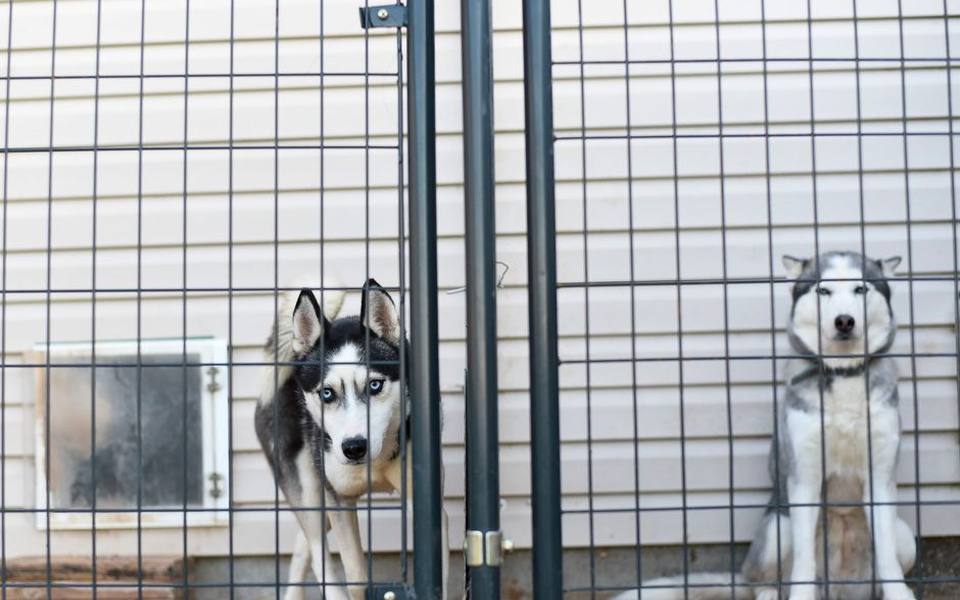
When browsing outdoor run kits at regional farm suppliers, pay close attention to the latching hardware and tubing wall thickness. Standard residential panels often utilize thin-wall galvanized tubing that can warp if an athletic canine charges the sides. Commercial-grade agricultural panels, in contrast, feature hot-dipped galvanized frames with reinforced square corners and gravity-drop latches that prevent clever paws from nudging the gate open during unsupervised moments.
Ground anchoring is crucial when setting up any modular pen on soft earth or grass. Even a heavy steel run can shift over time if an eighty-pound dog repeatedly hits the enclosure walls while chasing birds or squirrels. Driving heavy steel rebar stakes or auger-style ground anchors at every corner clamp keeps the structure rigid and prevents gaps from forming beneath the bottom rail where an escape-prone pet might burrow.
Portable Play Yards and Temporary Exercise Enclosures
Not every yard setup calls for permanent steel footings or heavy agricultural fencing. A portable dog run or collapsible exercise pen provides adaptable containment that shifts easily across the property to prevent turf wear, accommodate seasonal shade patterns, or accompany families on camping trips. These flexible enclosures consist of interlocking wire or composite panels that fold accordion-style, allowing owners to configure octagons, rectangles, or straight perimeter barriers in minutes.
Stability in portable configurations relies heavily on stake placement and ground contact. While lightweight wire systems work well on firm sod when secured with step-in ground stakes, energetic canines can easily slide or accordion an unsecured freestanding pen across concrete patios or wood decking. If you plan to set up a portable enclosure on hard surfaces, look for units with wide rubberized stabilizing feet or corner corner-drop rods that lock the joints in place.
Portability also makes these modular systems an excellent stepping stone for dogs transitioning to larger off-leash spaces. Introducing puppies or newly adopted rescues to a secure, movable enclosure builds perimeter confidence before granting full access to larger yards. For travelers, portable pens pair well with road trip itineraries, offering a safe staging area after visiting regional destinations like dog parks in Texas or coastal exercise zones.
Sizing Playpens for Small Dogs and Puppies
Small breeds and young puppies require specialized containment that prioritizes bar spacing over sheer panel height. A small dog playpen with vertical wire gaps wider than two inches can pose a serious entrapment hazard for toy terriers, miniature dachshunds, or growing puppies attempting to squeeze their heads through. Opting for panels with tight grid patterns or smooth acrylic inserts ensures complete containment without risk of pinched limbs or panic.
Height is equally important when evaluating pens for petite canines with surprising vertical spring. While a twenty-four-inch panel might keep a French bulldog safely contained, an agile Jack Russell terrier or miniature pinscher can clear low barriers without hesitation. A thirty-inch or thirty-six-inch height provides an extra margin of security without making it cumbersome for owners to step in and out for cleanups or training sessions.
Flooring inside an indoor-outdoor puppy yard needs careful attention to protect both paws and underlying surfaces. Water-resistant canvas bottoms, rubberized interlocking mats, or washable artificial grass pads create sanitary boundaries that simplify housebreaking. Setting up these designated enclosures gives small dogs an enriched environment with their bed, puzzle toys, and fresh water, keeping them comfortable while staying safely separated from larger backyard hazards.
Heavy-Duty Playpens and Play Yards for Large Dogs
Managing large, powerful breeds demands playpens built with structural mass and adequate vertical clearance. A big dog playpen must resist not only direct outward leaning from dogs weighing seventy pounds or more, but also the torsional force generated when a canine places its front paws on the top rail. Lightweight aluminum wire frames that buckle under moderate pressure should be avoided in favor of solid steel tube construction with hammer-tone powder coatings.
Panel height for large dog play yards should generally measure at least forty to forty-eight inches from ground to top rail. For athletic breeds such as Belgian Malinois, Boxers, or German Shepherds, even a four-foot wall can serve as an invitation to jump, making fifty-four-inch panels or enclosed mesh roof tops a sensible upgrade. Walk-through gates with integrated threshold steps allow humans easy access without presenting a low corner that dogs can use as a climbing foothold.
When positioning a large playpen outdoors, surface stability directly influences longevity and safety. Heavy canines running along the inside perimeter can churn dirt into deep ruts within days, potentially exposing panel undersides and destabilizing base clamps. Placing the pen over a stabilized gravel pad, concrete slab, or reinforced artificial grass prevents wall shifting while eliminating mud tracks during damp seasonal transitions.
Installing Artificial Turf for Mud-Free Runs
Natural grass rarely survives the focused traffic of a narrow dog run, quickly degenerating into a hardpacked dirt track that turns to thick mud with the first rainfall. Installing dedicated artificial turf inside the run resolves this problem entirely, delivering an all-weather, easily sanitized play surface. However, canine turf installations differ significantly from standard landscape grass because drainage, odor control, and dig prevention dictate every step of the sub-base construction.
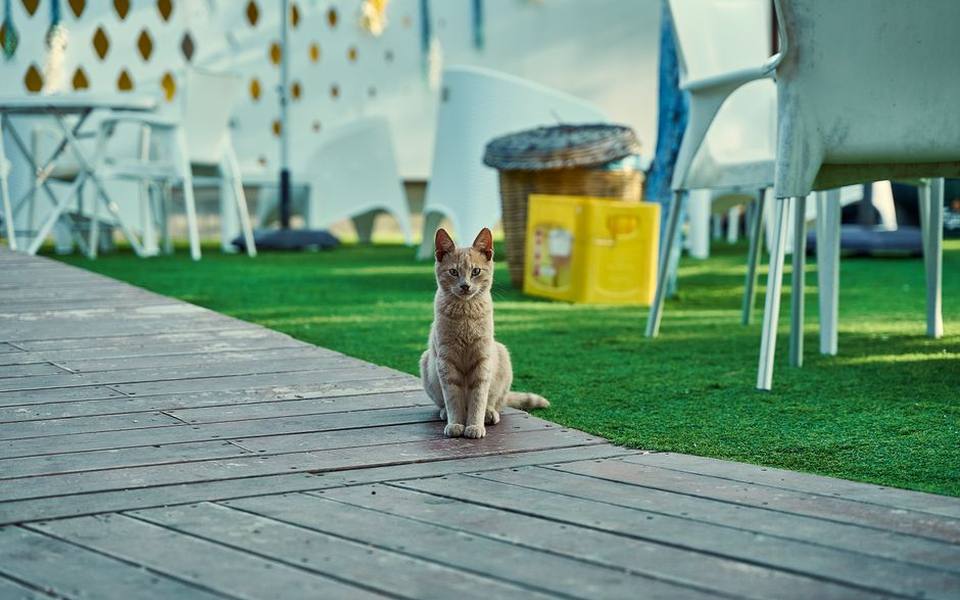
The installation process begins with excavating three to four inches of native soil to eliminate organic matter and roots. A crushed aggregate base, typically comprised of decomposed granite or three-eighths-inch minus crushed stone, is spread, graded with a slight slope for run-off, and compacted thoroughly using a plate compactor. A heavy-duty geotextile weed barrier is then laid beneath the turf backing to prevent underground weed growth while permitting rapid liquid filtration through the perforated synthetic carpet.
Pet-specific artificial turf features short, dense pile blades made of non-toxic polyethylene or polypropylene, paired with fully permeable urethane backing. Unlike landscape turf that utilizes crumb rubber infill, pet runs require antimicrobial acrylic-coated sand or natural zeolite infill. These specialized infills do not retain solar heat as severely as black rubber and actively neutralize ammonia crystals from dog urine, preventing persistent odors from settling into the yard.
Setting Up Agility Weave Poles for Home Footwork
Backyard agility equipment brings mental stimulation and physical conditioning right to your door, with weave poles standing out as one of the most technical and rewarding challenges. A standard competition-style set consists of six to twelve upright poles spaced evenly along a rigid ground base. Because dogs must learn a rhythmic, undulating stride to enter with the first pole on their left shoulder, practicing this footwork at home builds immense coordination and core muscle strength.
When choosing agility weave poles for residential practice, beginners benefit tremendously from systems that support the 2x2 training method or channel weaving configurations. Channel systems allow you to offset the poles laterally into two parallel lines, creating an open walkway down the middle that you gradually narrow as your dog gains confidence. Fixed, rigid bases made of heavy flat steel prevent tipping during aggressive high-speed entries, while lightweight PVC sticks spiked directly into turf offer an economical starting option.
Pole diameter, flexibility, and base padding are critical safety considerations during home agility training. Regulation poles typically measure roughly thirty-six to forty inches in height with a consistent one-inch or one-and-a-quarter-inch outer diameter. Choosing poles made of UV-stabilized furniture-grade PVC or composite polymers prevents splintering if an excited dog collides with an upright at full speed, ensuring safe and repeatable backyard practice routines.
Incorporating Backyard A-Frames, Ramps, and Climbing Gear
Beyond weaving poles, contact obstacles such as A-frames, dog walks, and climbing ramps introduce vertical variety into your pet's backyard workout. These structures challenge a dog's proprioception, balance, and spatial awareness while burning surplus energy far faster than flat running alone. When built or purchased for backyard use, contact equipment must feature non-slip surfaces coated with rubber granulate or textured marine-grade grit paint to guarantee secure traction in all weather conditions.
Scale and angle adjustments are critical when introducing canines to climbing obstacles at home. Standard competition A-frames reach apex heights exceeding five feet, which can pose unnecessary impact stress on joints during daily casual play. Sourcing an adjustable home unit that allows you to lower the peak angle to three or four feet lets younger dogs, seniors, or casual hobbyists build confidence without risking joint strain upon descent.
Routine equipment inspections protect your dog from preventable slips and hardware failures. Check wood panels regularly for warping, splinters, or peeling grip coatings caused by seasonal humidity and ultraviolet exposure. Aluminum-framed structures with composite decking offer excellent rust resistance and structural longevity, remaining stable even when broad-chested working breeds launch themselves toward the downward contact zones.
Integrating Commercial Dog Park Equipment at Home
Homeowners with expansive lots or multi-dog households often choose commercial-grade dog park equipment to create permanent, low-maintenance playground yards. Public park features like heavy-gauge rotomolded crawl tunnels, reinforced jump hurdles, and stepped grooming tables are built to withstand harsh weather, aggressive chewing, and continuous impact without deteriorating. Exploring well-maintained public spaces such as dog parks in California can give you practical ideas on how municipal equipment holds up against daily environmental wear.
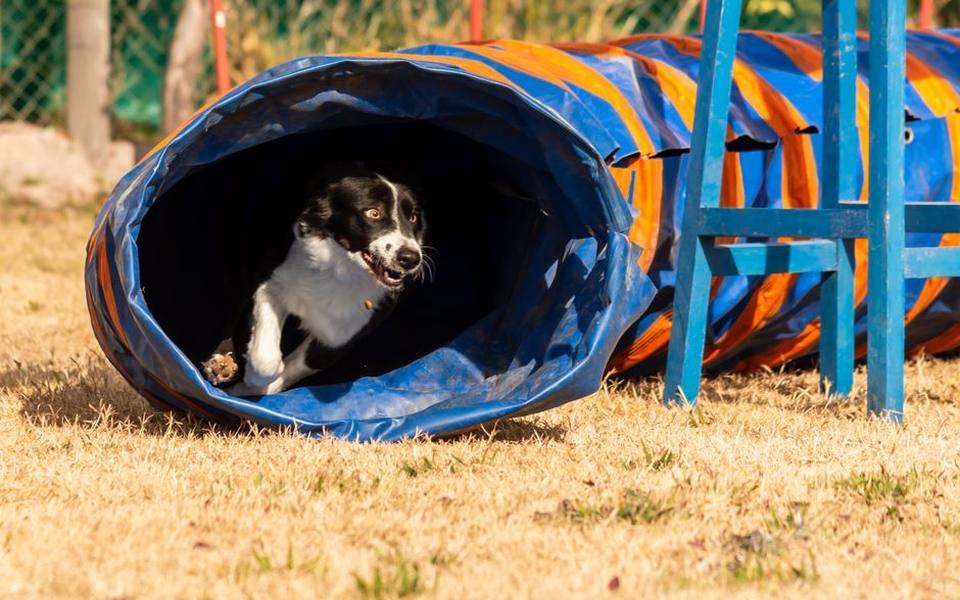
Tunnels designed specifically for canine use differ markedly from lightweight fabric training pop-ups or children's playground tubes. Pet-grade tunnels feature thick, UV-stabilized polyethylene walls with interior traction ribs that prevent dogs from slipping as they power through the bend. Heavy powder-coated steel anchor cradles hold the tunnel firmly against the ground, ensuring the barrel does not roll or collapse when a heavy dog brushes against the interior curve.
Stepping posts and balance platforms offer another durable addition that fits seamlessly into residential corners. These stationary pedestals encourage dogs to pause, balance, and wait for verbal cues, transforming purely physical play into impulse-control training. Placing equipment over impact-absorbing safety surfacing, such as pea gravel or thick rubber tiles, provides additional cushioning that protects paws and carpal pads during high-energy play.
Maintenance, Drainage, and Weatherproofing Your Play Zone
A well-engineered dog yard remains sanitary and safe only with consistent seasonal maintenance and thoughtful environmental management. Drainage is the most critical operational factor; standing moisture promotes bacterial proliferation, mold growth, and unpleasant odors. If your play area sits on clay-heavy native soil, integrating French drains, perforated catch basins, or sloped swales along the exterior perimeter keeps runoff moving away from both the kennel panels and your home's foundation.
Shade and hydration infrastructure transform an ordinary enclosure into a safe summer sanctuary. Metal dog runs and unshaded artificial grass can absorb substantial solar radiation during summer afternoons. Installing UV-blocking shade sails, waterproof canopy tarps, or planting dog-safe shade trees outside the fence line maintains comfortable ambient temperatures. In hot climates, adding misting lines or durable splash pads provides active cooling similar to amenities seen at dog parks with water features.
Routine sanitization requires non-toxic, pet-safe enzymatic cleansers that break down organic waste without degrading synthetic turf backing or corroding galvanized fence mesh. Rinsing turf runs weekly with high-pressure hose attachments flushes dust and residual urine through the drainage gravel below. Inspect latches, gate hinges, and fence tension clamps bi-monthly to catch loose bolts or ground settling before a secure play yard turns into an escape risk.
Published 2026-09-20 · reviewed with each rebuild, last September 2026.
Find dog parks near you
The directory lists 2,936 dog parks by state and city — pick your state or use the “Near me” button in the header.
More guides
-
 Owning
How to Find and Choose the Best Off-Leash Dog Parks
-
 Owning
What Is a Dog Run? Materials, Design, and Setup Guide
-
 Safety
Taking Your Dog Swimming: Safe Water Spots, Beach Rules, and Health Risks
-
 Service
How Much Does Dog Boarding Cost? A Clear Guide to Kennel Rates
-
 Owning
Dog Training Costs, Obedience Classes, and Essential Health Guidelines
-
 Owning
What Is a Reactive Dog? Signs, Triggers, and Management Guide
-
 Owning
A Practical Guide to Pet Adoption, Surrender Realities, and Essential Daily Care
-
 Safety
How to Safely Exercise and Run with Your Dog: Essential Gear and Conditioning Tips
-
 Safety
Comprehensive Guide to Dog Flea and Tick Treatments: Oral, Topical, and Natural Solutions
-
 Safety
Kennel Cough in Dogs: Symptoms, Home Remedies, and Prescription Treatments
-
 Owning
A Complete Practical Guide to Dog Beaches: Top Coastal Spots and Beach Safety
-
 Owning
Dog Car Seat Covers and Hammocks: Choosing the Best Vehicle Protection
-
 Owning
Understanding the Canine Heat Cycle: Phases, Physical Symptoms, and Female Care
-
 Owning
Essential Dog Hiking Gear: Backpacks, Hands-Free Leashes, and First Aid Kits
-
 Owning
Dog Agility Courses, Private Park Rentals, and Training Facilities: How to Choose the Right Space
-
 Service
Self-Service Dog Wash Stations: Equipment, Costs, and Practical Guide
-
 Buying
Automatic and Manual Dog Ball Launchers: How to Choose the Right Setup for Your Dog
-
 Safety
Complete Guide to Dog Flea and Tick Medications: Chews, Topicals, and Treatments
-
 Safety
Natural Flea and Tick Remedies for Dogs: Practical Home Solutions and Safe Use
-
 Safety
Safe Flea and Parasite Treatments for Puppies Under 12 Weeks
-
 Owning
Dog Poop Bags, Dispensers, and Leash Gear for Everyday Walks
-
 Owning
Ultimate Guide to Finding and Visiting Dog Parks and Dog-Friendly Beaches
-
 Safety
Dog Flea and Tick Guide: Comparing Chews, Topicals, Shampoos, and Injections
-
 Owning
A Homeowner's Guide to Backyard Dog Runs, Enclosures, and Exercise Treadmills
-
 Owning
A Complete Guide to Hiking, Camping, and Outdoor Adventures With Dogs
-
 Owning
Dog Health Guide: Giardia Symptoms, Canine Coughs, and Female Heat Cycles
-
 Safety
Understanding Dog Reactivity and Resource Guarding: Training Methods, Daily Management, and Gear
-
 Buying
Dog Car Seat Covers, Hammocks, and Travel Gear: A Practical Buyer's Guide
-
 Buying
Choosing the Right Automatic Ball Launcher and Backyard Play Gear for Active Dogs
-
 Owning
Self-Serve Dog Wash Stations, Towels, and Waste Management
-
 Safety
Complete Dog Flea and Tick Prevention Guide: Chews, Topicals, and Treatments
-
 Owning
Dog Friendly Beaches, Parks, and Travel Destination Guide
-
 Safety
Essential Outdoor Dog Gear: Harnesses, Life Vests, Hot Pavement Boots, and Bags
-
 Safety
Dog Park Safety Guide: Rules, Aggression, First Aid, and Kennel Cough Symptoms
-
 Safety
Comprehensive Guide to Dog and Cat Flea, Tick, and Heartworm Medications
-
 Owning
Choosing the Best Car Seat Covers, Hammocks, and Backseat Protectors for Dogs
-
 Buying
Dog Ball Launchers and Automatic Throwers: Selection, Sizing, and Field Guide
-
 Safety
Dog-Safe Yard Care: Pet-Friendly Lawn Fertilizers and Pest Sprays
-
 Owning
Dog Heat Cycles: Symptoms, Duration, and Care During Estrus